Life Style
Gillian Welch and David Rawlings Reimagine Grateful Dead’s Acoustic Legacy in Washington

Oct
The Grateful Dead’s catalog took on an entirely new acoustic dimension on Sunday, October 18, as Gillian Welch and David Rawlings brought their acclaimed Acoustic Reckoning tour to Washington’s Warner Theatre. Eschewing the wall-of-sound electric arrangements of the band’s stadium era, the duo anchored their performance in stark vocal harmonies, acoustic guitars, and the quiet emotional depth of compositions that have endured for generations. The capital city engagement launched a new autumn leg of the project, with a subsequent performance scheduled in Baltimore on October 19.
This timing imbues the tour with a profound gravity extending far beyond a standard anniversary tribute. While the concerts mark 45 years since the Grateful Dead released Reckoning—the 1981 live album compiled from acoustic sets recorded the preceding autumn—they also follow the January 2026 death of founding guitarist and vocalist Bob Weir. What was initially conceived as a celebratory retrospective now resonates within a fundamentally altered landscape for lifelong devotees and newer listeners alike.
At the core of this revival lies a delicate artistic balance: honoring a storied musical tradition without attempting an impossible facsimile of its original architects. Welch and Rawlings avoid theatrical reenactments, utilizing a stripped-down ensemble to explore the timeless architecture of the songs. The enduring appeal rests on hearing foundational compositions reinterpreted through seasoned interpreters of American roots music, revealing how much emotional power survives when arena-scale mythology is pulled away.
Uncovering the Quiet Spaces Within Classic Arrangements
The original 1981 release of Reckoning offered a radical shift in perspective. Drawn from historic 1980 residencies at San Francisco’s Warfield Theatre and New York’s Radio City Music Hall, the album captured the unamplified portions of performances typically dominated by expansive electric improvisation. This acoustic showcase highlighted the group’s profound affinity for traditional folk, blues, and country idioms.
Stripped of amplification, melodic structures that shifted nightly gained sharp clarity, magnifying subtle phrasing adjustments. Staples such as “Dire Wolf,” “China Doll,” “Cassidy,” and “To Lay Me Down” offered audiences an alternative entry point into the band’s repertoire, seamlessly blending original songwriting with centuries-old musical traditions. Rather than sounding like archival artifacts, the pieces pulsed with immediate artistic vitality.
This philosophy informs the 2026 tour. Commemoration alone cannot account for why contemporary artists would dedicate entire evenings to this specific material; instead, Welch and Rawlings treat the historic record as an exploratory launchpad. Expanding beyond the original track list to encompass broader corners of the Dead’s catalog, the performances function as dynamic, evolving interpretations rather than strict audio reproductions.
The format aligns seamlessly with the headliners’ long-standing collaborative ethos, which prioritizes intricate interplay between two voices and acoustic instruments. Bassist Paul Kowert adds rhythmic foundation, while minimalist percussion provides subtle momentum without relying on standard rock instrumentation—a lean configuration tackling exceptionally demanding material.
Replicating the Grateful Dead’s signature chemistry—characterized by elastic tempos and spontaneous improvisation—presents a formidable challenge. Rather than mirroring the parent band, Welch and Rawlings forge an independent path of stylistic freedom, defining success not by mimicry, but by fresh artistic conviction.
The 1981 record serves as an ideal blueprint for this restraint, proving that acoustic quietude enhances imagination. When acoustic guitars shoulder the propulsion once driven by a full rhythm section, listeners experience an intimate interplay of lyrics, harmonies, and purposeful silence, allowing familiar lyrics to resonate with startling immediacy.
Honoring a Legacy in the Wake of Loss
The emotional landscape of the tour shifted significantly between conception and execution. Although Welch and Rawlings committed to the project prior to Bob Weir’s passing, their initial spring performances arrived closely on the heels of a loss that reverberated deeply across the musical community. While the October dates continue this planned artistic journey rather than serving as a newly conceived memorial, the concerts remain inextricably linked to the events of January, particularly for fans who view Weir as an essential bridge across eras.
Following Jerry Garcia’s passing in 1995, Weir played a vital role in carrying the ensemble’s catalog forward through live performance. His absence marks another profound transition for a community rooted in shared gatherings. Consequently, hearing esteemed artists engage deeply with the material underscores that these songs transcend their original era, even as performances evoke poignant reminders of departed collaborators.
For Welch, the connection is deeply personal, rooted in her formative experience attending a 1987 Grateful Dead concert in San Francisco. Her lifelong appreciation spans the group’s introspective compositions alongside its jubilant anthems. This deep familiarity enables Acoustic Reckoning to eschew cheap nostalgic triggers, inviting listeners instead to explore the underlying themes of tenderness and melancholy without electric distraction.
These contemplative elements always anchored the band’s work, frequently overshadowed by iconic visual iconography, tie-dye imagery, and traveling tour culture. Yet quieter compositions like “Brokedown Palace” effortlessly transcend external aesthetics, proving independent of historical context or prior concert attendance.
Welch and Rawlings operate precisely within this intersection of collective memory and individual reflection. While seasoned attendees may unearth personal touchstones from decades past, newcomers discover compelling storytelling unburdened by dogma. Stripping away heavy production allows lyrics to land with uncompromised clarity and distinct emotional weight for every listener.
This methodology honors a venerable folk tradition wherein songs evolve through continuous cross-pollination. By filtering the Dead’s interpretations through their own artistic lens, Welch and Rawlings ensure the material remains a living, breathing component of American musical heritage.
Continuing the Journey Across Stages and Generations
The Washington engagement establishes momentum for an extensive regional itinerary, traveling next to Baltimore’s Lyric on October 19 and Richmond’s Carpenter Theatre on October 20, followed by further stops across Virginia and North Carolina. These dates highlight the tour’s broader scope, functioning not as isolated museum pieces, but as a sustained exploration of a living repertoire.
Curating a diverse pool of dozens of Grateful Dead-associated songs frees the duo from strict adherence to the 1981 track list. Performances fluidly transition between traditional folk motifs and complex electric-era arrangements, proving that acoustic instrumentation can successfully encompass the breadth of the band’s writing.
This thoughtful approach redefines the notion of a tribute tour. Whereas emulation relies on superficial mimicry, true respect often demands bold reimagination. Each creative departure validates the underlying compositions, allowing historic material to converse freely with the present moment.
While these intimate concerts cannot single-handedly define the future of the Grateful Dead’s immense legacy, they offer a compelling testament to the enduring power of communal listening. Audiences gather to experience familiar songs refracted through new perspectives, capturing the vital communal spirit that defined the group’s original appeal.
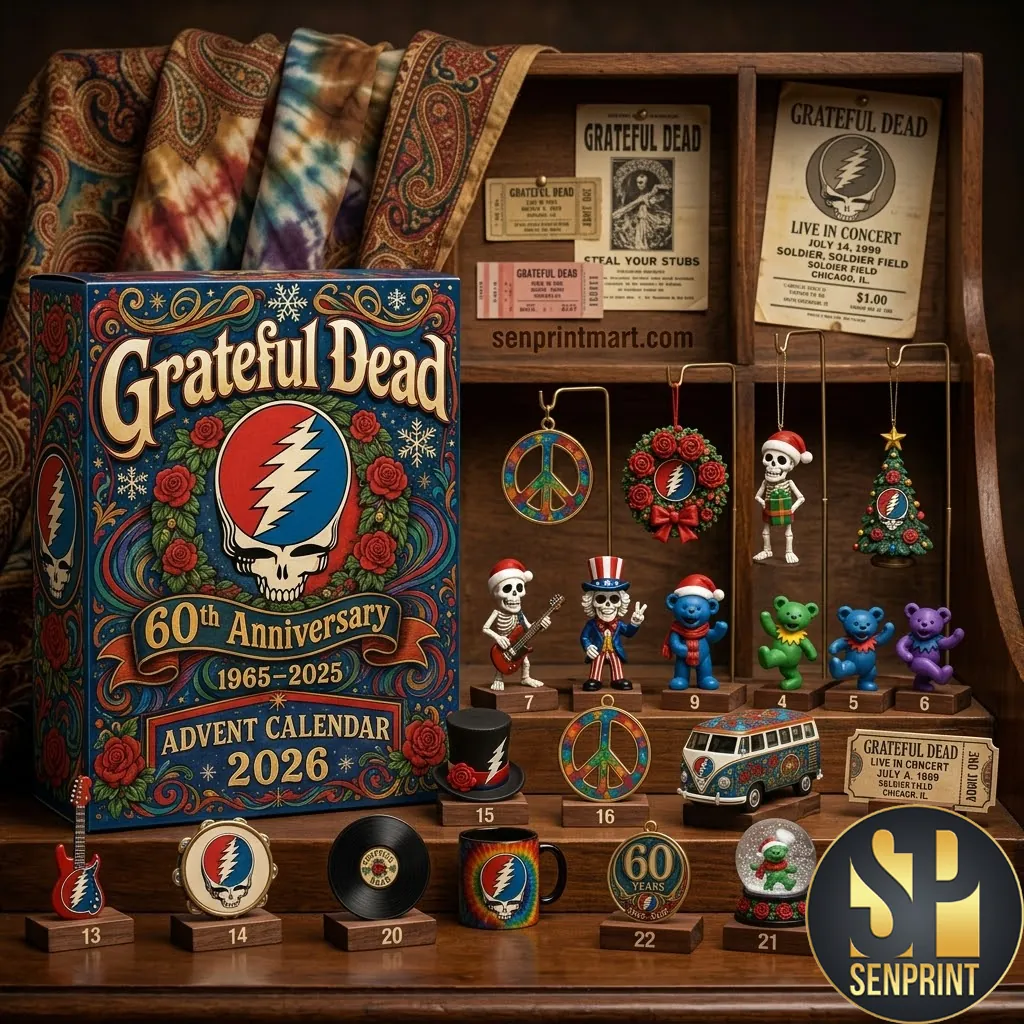
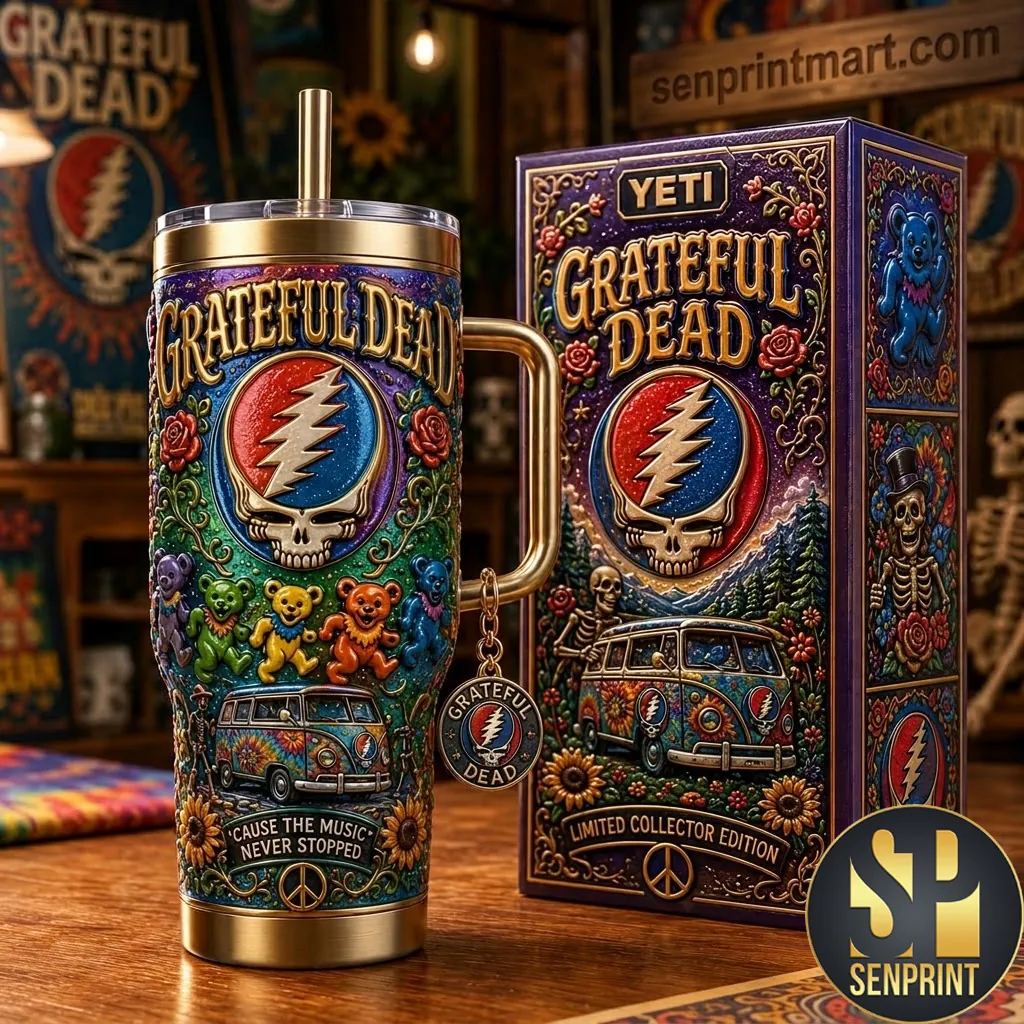
This enduring cultural footprint extends naturally into everyday fan traditions, where physical keepsakes help preserve concert memories long after the house lights rise. Everyday items like a Grateful Dead travel tumbler reflect a wider human desire to keep the feeling of the music close at hand during routine daily life, existing parallel to—yet distinct from—the stage performances.
Across rock fandom—from the theatricality of KISS to the guitar-driven identities of AC/DC and Van Halen, or the intimate lyricism of celebrated singer-songwriters—physical merchandise helps anchor visual memories. Yet only live instrumentation generates the immediate vitality of a song, explaining why unadorned interpretations like Acoustic Reckoning place the physical act of musicianship at the forefront.
Ultimately, the Washington engagement bridges history and the present moment. Four and a half decades after the source recordings, and amid profound community loss, the project demonstrates that masterworks endure when entrusted to inventive artists. The resulting performances offer neither mere impersonation nor easy closure, but rather living proof that classic songs remain dynamically vital in October 2026.
For audiences packing the hall, that artistic truth suffices. The Grateful Dead engineered music built to outlast its creators, and Welch and Rawlings continue to prove that this journey requires no amplification to resonate deeply. On a Washington stage, the true triumph of the anniversary was not a static recreation of 1981, but the vibrant realization that these songs remain remarkably unsettled, necessary, and alive.
The Full Collection
Explore the complete assortment of music, pop culture, sports, games and seasonal designs featured in this collection.