Life Style
Monopoly Heads to Bourbon Country as Bib & Tucker Turns Bottle Toppers Into Game Pieces
Oct
A whiskey-inspired remake puts the smallest objects at the center of a familiar game.
Monopoly has relocated far from its traditional Atlantic City boardwalk. On October 14, Tennessee whiskey producer Bib & Tucker and Hasbro partnered to launch a limited-edition property-trading game trading seaside properties for an immersive world of distillation, rail transport, and turn-of-the-century ingenuity. The most striking update fits directly into the palm of a player’s hand: six custom tokens modeled after collectible bottle toppers, highlighted by a piece commemorating the dawn of motion pictures.
Entitled MONOPOLY: Bib & Tucker Collector’s Edition, the release debuted exclusively via ReserveBar on launch day. Available as a standalone board game for a suggested price of $29.99, the release also offers a $74.99 bundle pairing the game with a bottle of the brand’s signature The Classic Six bourbon. This distinction is deliberate; while designed with adult spirits enthusiasts in mind, the game functions as a complete, independent collectible rather than mere packaging.
For a franchise with such a universally recognized visual vocabulary, the collaboration prompts a deeper inquiry than standard licensed board games typically invite: how completely can a familiar game adopt a new identity before its properties and mechanics begin conveying a wholly different narrative? Bib & Tucker bridges the gap between a whiskey collector’s display shelf and the family game night through meticulous token design, ensuring the physical craftsmanship drives the story.
A Familiar Board Takes an Unfamiliar Journey
The classic Monopoly board functions as a miniature metropolis, where players traverse the perimeter accumulating assets and navigating financial consequences. This robust framework has accommodated countless artistic and thematic variations over the decades. In this iteration, the route adopts a distinctively historic Americana character, replacing traditional Atlantic City landmarks with historical sites and industrial inventions tied to the brand’s heritage.
Locations such as Rickhouse Row, Lincoln County, and the Statue of Liberty anchor the updated board alongside spaces like Frontier Fortunes and Community Crate. The traditional Income Tax square is cleverly reimagined as Angel’s Share, a nod to the natural spirit evaporation occurring during barrel aging. Meanwhile, the B&T Express invokes the crucial era of rail expansion that united distant regions. Far from superficial re-labeling, these modifications cultivate an atmosphere centered on industrial manufacturing and nineteenth-century machinery.
An inherent creative tension arises when adapting a game centered on property ownership to an era defined by transportation and expansion. Monopoly is fundamentally competitive, yet the historical backdrop chosen here celebrates networks of mobility—railways, streetcars, and early automobiles—that fostered national connectivity. Players thus engage with familiar wealth-building mechanics within an environment highlighting the engineering marvels that made commerce and travel possible.
Makers make no claim of an entirely overhauled rulebook, focusing instead on the aesthetic transformation and custom pieces. While this might initially appear modest, physical game design relies heavily on tactile immersion: the board establishes the setting before a single turn is taken, while each token provides players with a physical avatar to inhabit throughout the match.
During standard gameplay, these metal figures are handled continuously, passed across squares, and occasionally debated before the dice are even rolled. Many participants develop strong attachments to specific pieces, making the token a deeply personal element of a collective experience. By grounding all six tokens in independent historical artifacts, Bib & Tucker endows them with a dual identity, functioning simultaneously as collectible display items and active game pieces.
Six Miniature Objects Carry a Much Longer Story
The six figures derive from Bib & Tucker’s Magnificent Marvels Collection, an annual series of limited-edition bottle toppers celebrating historical milestones in American innovation. Across six releases, the brand has honored Lady Liberty, a steam engine, a motorcycle, a streetcar, a gasoline-powered automobile, and—for 2026—the Vitascope. In this collaboration, that entire lineage transitions directly from spirit bottles onto the gaming board.
The inclusion of the Vitascope adds particular historical weight. Publicly demonstrated in 1896, the early motion-picture projector transformed projected media from a solitary peepshow into a communal theatrical experience. This artifact links the board game to the emergence of shared mass entertainment—reminding players that both tabletop gaming and cinema rely on collective engagement around a shared focus.
There is a charming symmetry in adapting an early cinematic invention into a miniature game token: a device originally designed to set pictures in motion now moves in response to a player’s deliberate choice. This concept is intuitive enough to appreciate immediately while offering rewarding detail upon closer examination, elevating the item from fleeting novelty to lasting collectible.
The remaining tokens draw on equally potent cultural symbols: Lady Liberty represents national aspiration, steam engines evoke industrial expansion, automobiles and motorcycles chart the evolution of personal transit, and streetcars reflect urban public life. Utilizing these recognizable motifs, the collection creates a shared visual vocabulary that resonates naturally in miniature form.
Incorporating the 2026 topper ties the game to a precise contemporary moment. This year’s bottle release features the Vitascope motif on select bottles of The Classic Six, while the board game unites all six historical predecessors into a single set. Followers of the bottle-topper series can thus view the complete lineage assembled together, while board game enthusiasts encounter the entire thematic arc at once.
This design forms a direct bridge between distinct collecting subcultures. While bottle toppers accompany spirits purchased for consumption or shelf display, gaming tokens are built for active tactile engagement. The collaboration bridges these worlds without conflating their underlying motivations, allowing the realms of fine spirits collecting and tabletop gaming to converge through shared objects.
The Holiday Proposition Is Bigger Than a Gift Box
Debuting in mid-October as brands vie for early holiday attention, the release is explicitly positioned for seasonal gifting under limited-availability terms. Yet the structure of the offering is particularly notable: consumers can purchase the board game independently or opt for a bundled package pairing the game with bourbon for eligible adult buyers. This dual format ensures the release remains accessible primarily as a game, despite its spirits-industry provenance.
The bundled bourbon is The Classic Six, a small-batch Tennessee expression aged a minimum of six years and bottled at 92 proof. Its holiday packaging features the Vitascope topper—the exact 2026 motif concluding the game’s token set. This precise physical correspondence between bottle and board forms the core design statement, presenting two distinct formats united by a common artistic thread rather than a haphazard retail pairing.
This tiered approach broadened potential audience appeal. Tabletop enthusiasts might seek out the custom artwork and unique tokens without purchasing spirits, while bottle-topper collectors could view the board as a companion piece to existing displays. Meanwhile, casual gamers might approach it simply as a familiar pastime clad in a novel aesthetic.
Such editorial restraint is vital when discussing limited editions, as restricted distribution does not automatically guarantee long-term aftermarket scarcity or value appreciation. While the manufacturers outlined exclusive retail channels and a while-supplies-last availability window, public production figures were not disclosed. Observers can best evaluate the release on its immediate merits: material specificity and cohesive aesthetic execution.
Achieving balance in licensed merchandise remains notoriously difficult; minimal customization risks feeling like superficial branding, while excessive alteration obscures the core game identity. The Bib & Tucker edition successfully navigates this middle ground, remaining instantly recognizable as Monopoly while inhabiting a distinctive historical landscape far removed from Atlantic City.
What Happens When Collecting Becomes Participation
Display shelves invite quiet observation, whereas gaming tables demand active participation. While a collectible figurine often remains pristine inside protective packaging, a game token is handled, moved across boards, and subjected to the unpredictable fortunes of play. Once deployed in a match, miniature replicas like the Vitascope transcend static display status, accumulating personal memories tied to the game itself.
This transition from passive display to dynamic use represents the project’s most compelling conceptual strength, addressing a central challenge for branded memorabilia: how an object can embody a favored brand while generating independent engagement. Because Monopoly supplies established gameplay mechanics, the custom artwork and tokens do not need to reinvent entertainment, instead anchoring a timeless pastime in a rich thematic setting.
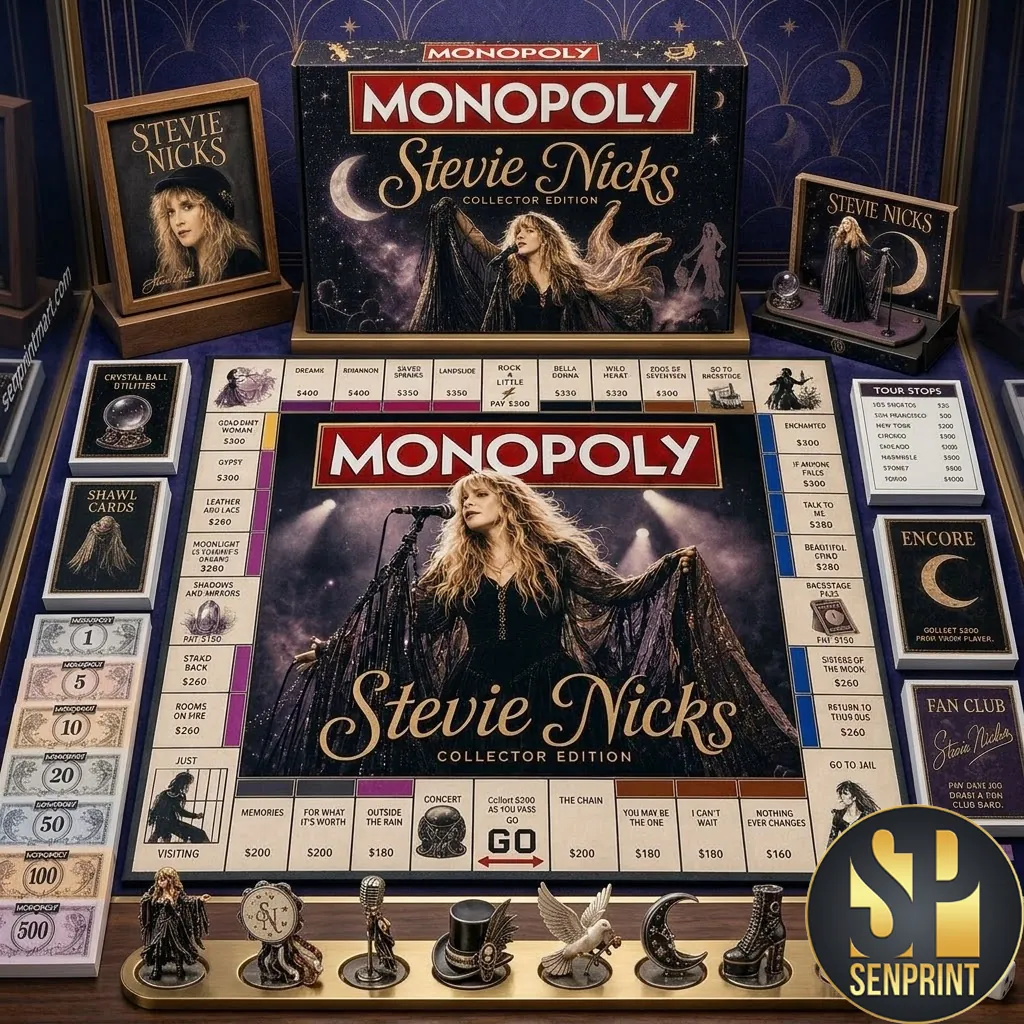
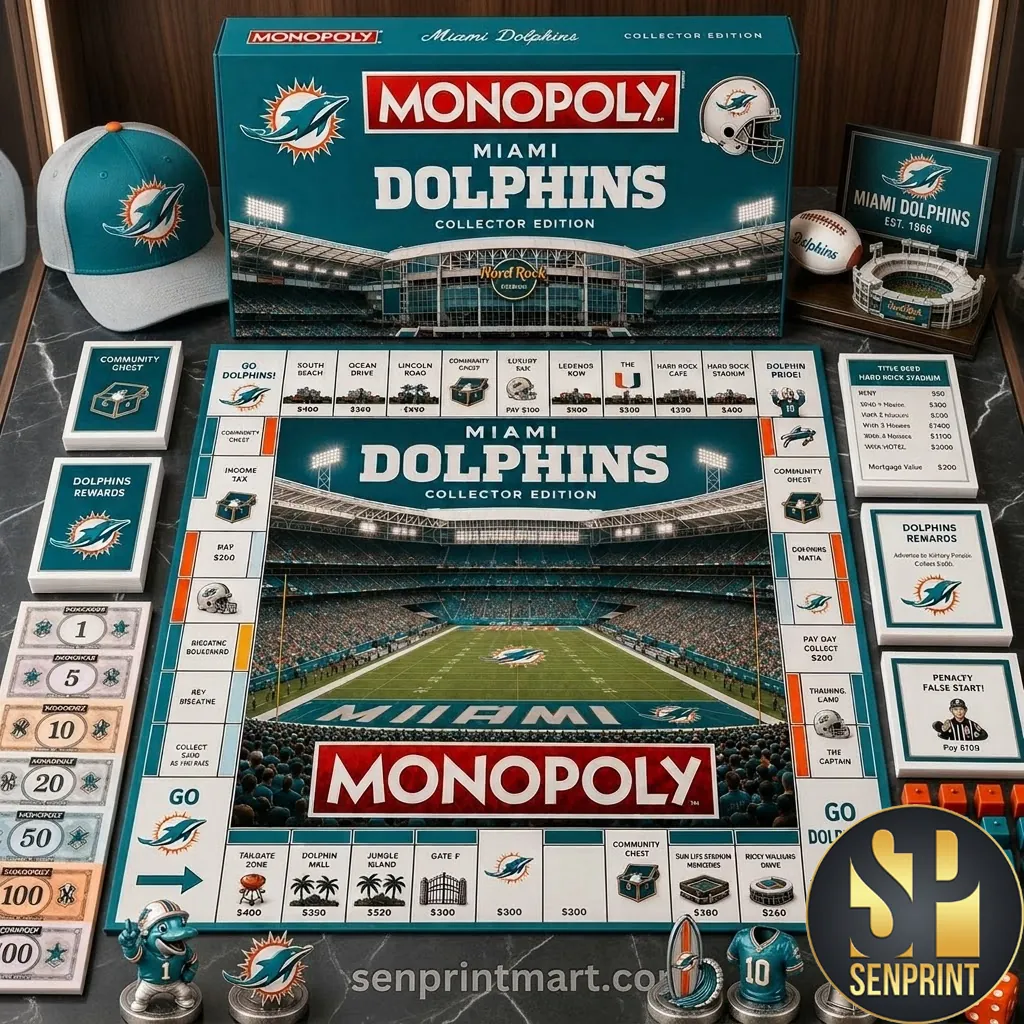
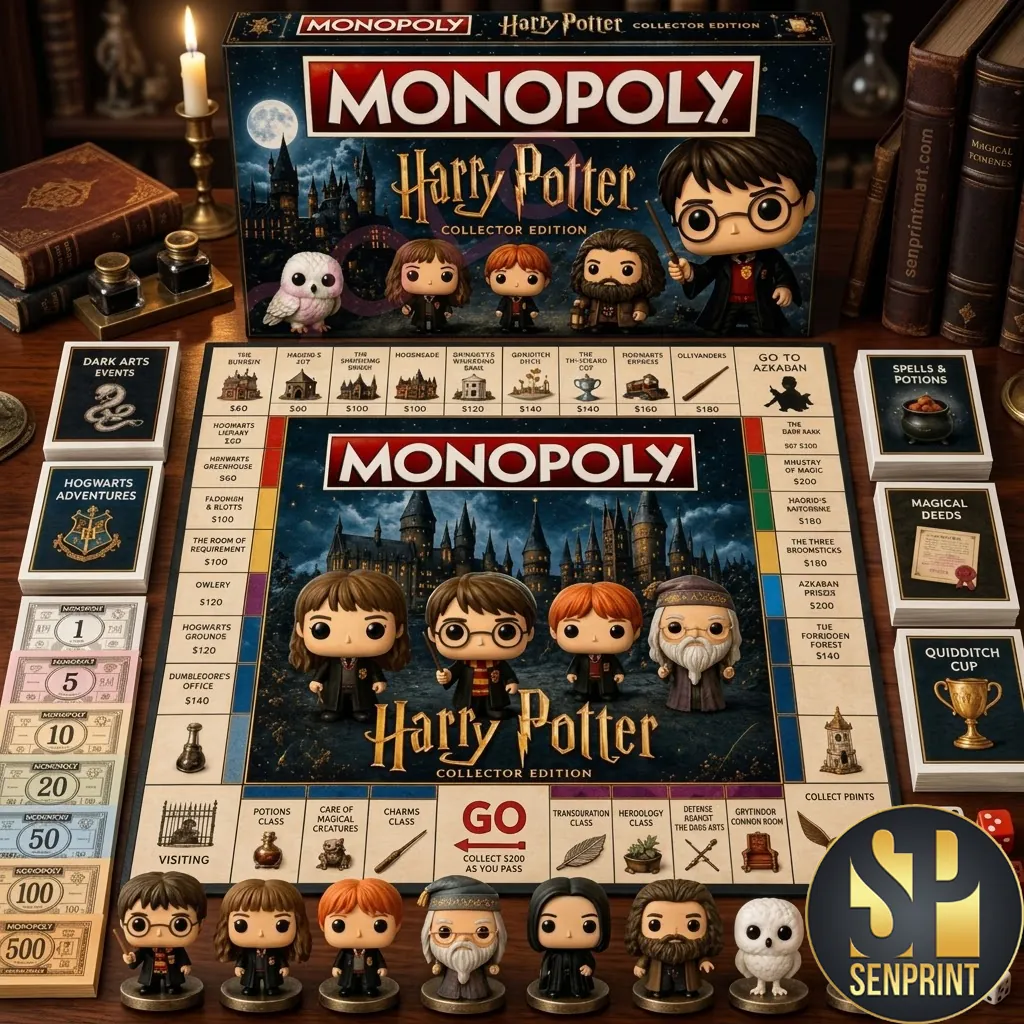
Such dynamics explain the enduring appeal of specialized board game editions rooted in specific cultural touchstones, fictional universes, or athletic franchises. Examples such as a Stevie Nicks-themed Monopoly game, a Harry Potter-themed Monopoly game, and a Miami Dolphins edition—all featured in the broader collection—cater to distinct personal fandoms. While those releases rely on recognizable personalities and team loyalties, the Bib & Tucker edition grounds its identity in industrial history and vintage artifacts.
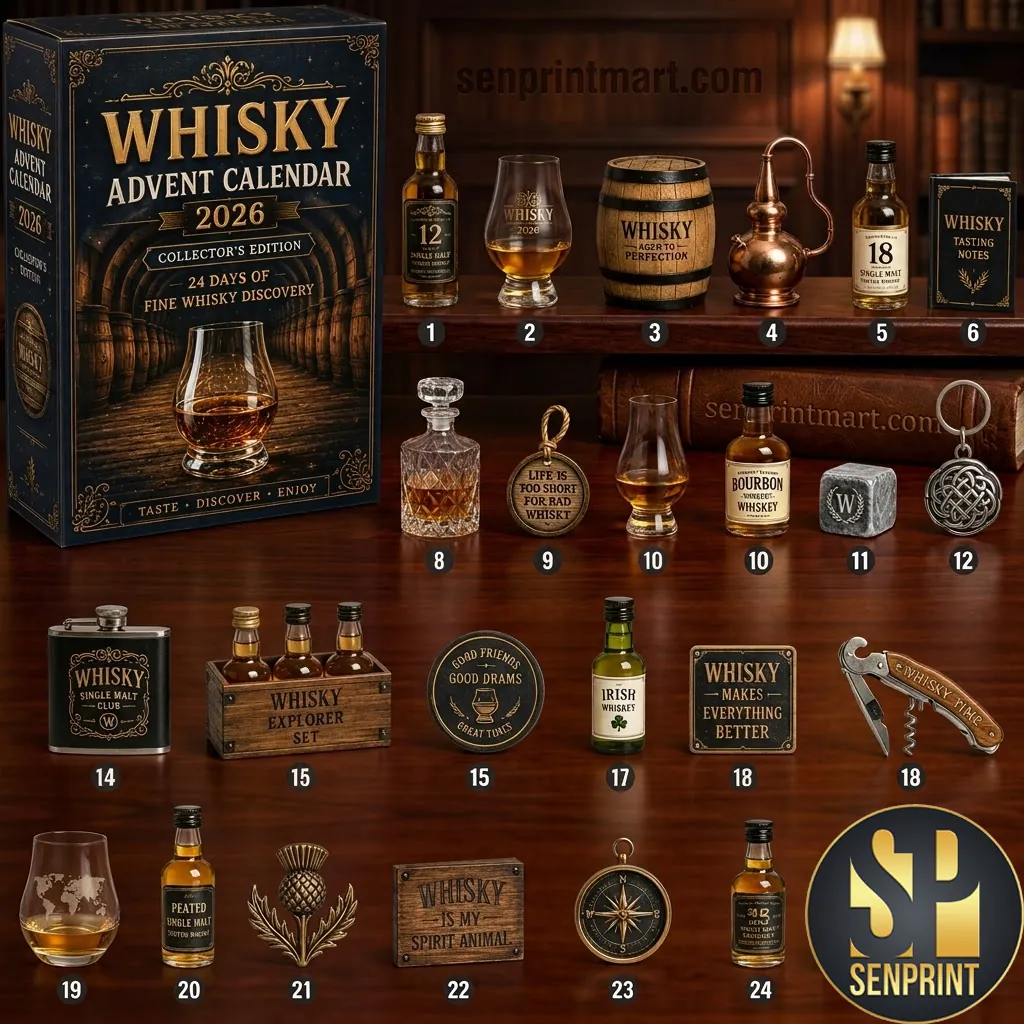
Alternative offerings illustrate the diverse ways physical merchandise connects with consumers, from sports-themed mystery games to daily holiday countdowns. For instance, a whisky discovery calendar structures its engagement around anticipation spread across multiple days rather than a single evening of competition. Though distinct in format, these products demonstrate how physical collectibles gain resonance when tied to structured seasonal rituals.
While these items share no direct corporate affiliations, they reflect a common consumer desire: pairing familiar formats with recognizable cultural identities, whether representing a favored musical artist, a sports franchise, or craft spirits history. The Bib & Tucker release exemplifies this trend by utilizing tokens that enjoyed prior lives as standalone collectibles before anchoring a tabletop game.
Ultimately, the success of the release will be determined by actual gameplay rather than initial marketing buzz. Whether buyers utilize the custom boards for game nights or preserve them as pristine collector items remains to be seen, with both outcomes fitting the dual nature of limited editions. For now, the most notable takeaway is the successful translation of industrial motifs across two distinct creative mediums.
That is precisely what distinguishes the October 14 debut. While cross-branded games often rely solely on box-art novelty, the core appeal here lies in tactile details—a statue, streetcar, vehicle, or projector moving across a board where fortunes shift with every roll. Monopoly remains fundamentally unchanged, yet its historical companions render a familiar journey refreshingly novel.
Curated Product Collection
Explore an editorially curated selection of tabletop games, fan collectibles, seasonal countdowns, and commemorative apparel.