Life Style
Milwaukee Overturns Four-Run Deficit to Complete Sweep of Dodgers, Claiming First NL Pennant in 44 Years

Oct
Milwaukee has secured the National League pennant, halting the Los Angeles Dodgers’ bid for a third consecutive World Series title. Overcoming a four-run deficit at Dodger Stadium on Thursday, October 15, the Brewers secured a 6–4 victory to complete a commanding four-game sweep of the National League Championship Series. The triumph propels Milwaukee to its first Fall Classic appearance since 1982, concluding a 44-year absence on the very field where their prior postseason run ended in disappointment.
For a stretch, the clinching matchup bore the hallmarks of a classic Dodgers postseason escape. Following Shohei Ohtani’s three-run home run in the second inning, Los Angeles surged to a 4–0 advantage, filling a hostile stadium with renewed hope of overcoming a three-game series deficit. Rather than relying on a solitary dramatic blow, Milwaukee methodically chipped away through patient at-bats, crucial doubles, walks, and disciplined base-running until Garrett Mitchell’s sixth-inning home run provided a decisive advantage the visitors refused to relinquish.
The outcome carried profound historical symmetry. Exactly one year prior, the Dodgers had swept Milwaukee in the exact same round en route to championship glory. With this sweep, the Brewers achieved a historic first in Major League Baseball postseason annals, becoming the inaugural club to be swept by an opponent only to sweep that exact same franchise in the subsequent postseason. This statistical turnaround transformed Thursday’s festivities from a routine pennant celebration into a definitive rewriting of a lopsided postseason rivalry.
The lead that could not hold
Entering Game 4 with zero margin for error, Los Angeles leaned upon its back-to-back World Series pedigree, star-studded roster, and elite pitching depth to fuel hopes of a miraculous recovery. Yet the mathematical reality remained unforgiving: a single defeat spelled elimination. Conversely, the Brewers stood just nine outs away from converting a stellar 103-win campaign into the franchise’s inaugural National League pennant.
The early frames provided the defending champions with an ideal offensive ignition. Andy Pages opened the scoring before Ohtani, reinstated at the leadoff position, launched a towering drive into the right-field bleachers with two teammates aboard. The blast established an imposing four-run cushion, underscoring the swift impact of Los Angeles’s premier slugger and briefly making a return trip to Anaheim feel entirely attainable.
However, commanding early margins remain precarious if vulnerable to sustained middle-inning pressure. Although Tyler Glasnow retired the initial Brewers batters efficiently, Milwaukee gradually manufactured high-leverage situations by stringing quality at-bats together. A fourth-inning walk drawn by Brice Turang set the stage for William Contreras’s double, followed swiftly by Jake Bauers’s two-run double. While Los Angeles maintained the scoreboard edge, the tactical momentum began to shift.
The fifth inning fundamentally altered the atmosphere at the ballpark. David Hamilton’s RBI single narrowed the deficit to a single run, initiating relentless pressure on the Dodgers’ relief corps. Four walks issued during the frame—culminating in a bases-loaded free pass to Bauers—forced home the equalizer. Lacking the dramatic flair of Ohtani’s earlier home run, Milwaukee’s methodical buildup demonstrated how compounding pressure can erode an imposing advantage.
Mitchell delivered the quintessential highlight-reel swing in the sixth. Leading off against reliever Tanner Scott, he battled through a gritty count before launching a fastball deep over the center-field wall to put Milwaukee ahead 5–4. Though the contest remained fraught with late-game tension, the home run inverted the emotional landscape, casting the Brewers as defenders of a fragile lead and forcing the Dodgers into urgent rescue mode.
The anticipated Los Angeles counterpunch never materialized. In the seventh frame, the Dodgers advanced the potential tying run to third base with Ohtani stepping into the batter’s box; reliever Aaron Ashby responded by striking him out before inducing a groundout from Mookie Betts. When Will Smith reached third in the eighth, Ashby extinguished the threat once more by retiring Kyle Tucker and Teoscar Hernández. Success hinged not on unhittable pitching dominance, but on stubborn defensive execution under extreme duress.
Hamilton provided crucial insurance with a solo home run in the ninth, extending the margin to 6–4. Ashby wrapped up a brilliant three-inning scoreless save when Jackson Chourio secured the final out on a fly ball near the left-center-field warning track, triggering a jubilant dugout celebration. Concluding a four-game sweep over the reigning champions, Milwaukee’s wire-to-wire resilience showcased the fierce composure required to vanquish elite opposition.
More than a rematch
The decisiveness of the series stemmed from a collective offensive output rather than individual heroics. Named the Championship Series MVP, Bauers anchored a potent attack characterized by disciplined plate appearances and crucial extra-base hits. Alongside Mitchell’s clutch home run and Hamilton’s productive contributions from the bottom of the order, the Brewers’ depth proved capable of generating offensive pressure throughout the lineup.
For manager Pat Murphy, roster depth provided tactical flexibility while demanding absolute trust across the bench. Overcoming a powerhouse franchise like Los Angeles requires neutralizing star power with extended at-bats, flawless defensive fundamentals, and resilient bullpen performances. By executing these unheralded aspects flawlessly, Milwaukee swept the series without dropping a single contest.
Regular-season statistics validate that Milwaukee’s postseason presence was no fluke. Claiming a major-league-best 103 victories in 2026, the Brewers sustained their competitive edge by consistently responding to adversity. Their four-run rally in Game 4 marked their largest postseason comeback of the year and equaled the largest deficit ever overcome in an LCS-clinching matchup.
For Los Angeles, the elimination carried the sting of unaccustomed vulnerability as traditional postseason resilience faltered. Having previously engineered dramatic playoff comebacks during their championship runs, the Dodgers struggled to capitalize on key scoring opportunities, while their starting rotation failed to establish control. Even Ohtani’s explosive offensive output proved insufficient to alter the series trajectory.
This disappointment underscored the formidable ambition behind the Dodgers’ pursuit of a historic three-peat. Securing consecutive titles is an elite feat, and a third would have cemented dynastic status. However, historical pedigree offers no scoreboard advantage. By consistently dictating high-pressure situations, the Brewers outplayed the defending champions in critical game-defining moments.
Within Milwaukee’s baseball history, the milestone carries monumental significance. The franchise’s sole prior World Series appearance occurred in 1982 as an American League club, culminating in a hard-fought seven-game defeat to St. Louis. Decades of competitive division races and playoff near-misses followed without another pennant breakthrough. Thursday’s triumph secured the organization’s first National League title, rewarding a new generation of fans with a long-awaited Fall Classic berth.
Facing Los Angeles added extra weight to the achievement, given recent postseason history. The Dodgers had frequently eliminated Milwaukee in recent years, including a decisive sweep concluding the 2025 campaign. By returning the favor a year later with a dominant sweep, the Brewers avenged past exits, permanently altering the historical narrative between the two rivals.
Veteran outfielder Christian Yelich bridges past heartbreak with present triumph. Arriving in 2018 at the dawn of Milwaukee’s competitive era, he endured numerous playoff disappointments. Consequently, reaching the World Series serves as both a milestone for rising talents like Chourio and a well-earned vindication for veterans who weathered years of postseason frustration.
Milwaukee gets its October back
Sweeping the series affords the Brewers a valuable commodity: recovery time. With the World Series set to open in Milwaukee on October 23, the club enjoys several days of rest while Cleveland and Tampa Bay contest the American League pennant. For a heavily taxed pitching staff, this extended pause provides essential physical rejuvenation ahead of the final championship series.
Managing this layoff requires careful balance. While rest rehabilitates fatigued arms, prolonged inactivity can disrupt an offensive rhythm established through fierce postseason competition. The coaching staff must maintain competitive sharpness before facing a rested American League opponent on the ultimate stage.
Questions surrounding pitcher Jacob Misiorowski’s optimal workload remain entering the opener. Though a standout contributor during the regular season, his postseason usage has been selectively managed. While additional rest broadens strategic options, prior bullpen excellence offers no guarantees against a fresh championship opponent.
As of October 19, the American League challenger remains undetermined, creating a unique interim period of preparation. Knowing the venue for Game 1 while awaiting an opponent allows the Brewers to celebrate their pennant while charting contingencies for both AL finalists.
Conversely, Los Angeles faces an immediate offseason evaluation focused on roster health and core longevity. While a single postseason defeat does not tarnish their recent championship legacy, the definitive nature of the sweep highlights a stark shift in conference dominance.
In Milwaukee, the local sports calendar expands to embrace hosting baseball’s premier showcase. Following a 44-year wait, the city prepares to author fresh Fall Classic memories, ensuring this pennant stands as a triumphant chapter regardless of the upcoming championship outcome.
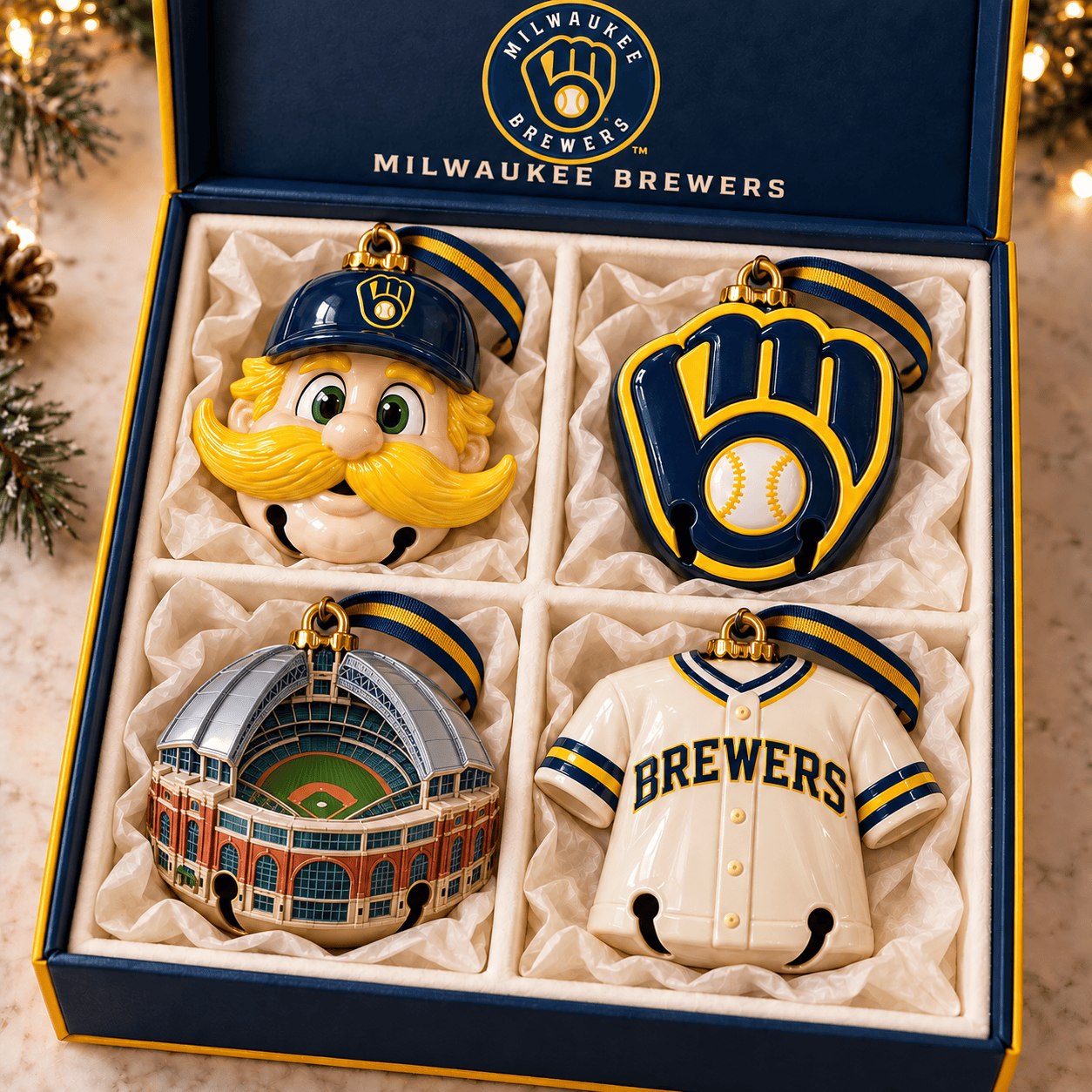
Fan devotion endures far beyond the final out, immortalized in photographs, family storytelling, and commemorative memorabilia. Featured within seasonal collections, items such as a Milwaukee Brewers holiday bell set and a Dodgers Christmas countdown calendar reflect contrasting emotional realities of this October—one faithful fan base celebrating a historic return, another processing the conclusion of an era.
As Milwaukee awaits its final challenger and prepares to answer whether this squad can surpass the 1982 club, one definitive reality remains: the Brewers reign as National League champions, the Dodgers’ championship run has concluded, and the World Series is returning to Wisconsin.