Life Style
Hello Kitty Takes the Controller as Sanrio Games Launches Its First Title
Oct
Hello Kitty is expanding her presence into interactive entertainment as Sanrio steps directly into video game publishing. Hello Kitty Party Land officially launched on Thursday, October 29, 2026, for the Nintendo Switch and Nintendo Switch 2, marking the inaugural release under the newly established Sanrio Games label. While a vibrant town populated by more than 145 familiar characters serves as the setting, the core evolution lies in player agency—permitting fans to actively compete, cooperate, and customize experiences rather than merely observing from the sidelines.
This launch represents a strategic milestone for a brand whose iconic characters have long saturated apparel, accessories, and stationery. Although Sanrio has previously licensed its intellectual property to external developers, Party Land is the first self-branded gaming venture carrying the company’s direct publishing banner. The title relies on a straightforward value proposition: an instantly recognizable roster, accessible gameplay mechanics, and robust multiplayer support. Its long-term viability as a franchise, however, will ultimately depend on post-launch engagement rather than sheer brand recognition.
This dynamic underscores the commercial stakes of Thursday’s rollout. Figures such as Hello Kitty, Kuromi, and My Melody possess rare cultural adaptability, seamlessly transitioning from subtle accessories to bold streetwear. Interactive media, however, imposes entirely different demands; characters must sustain prolonged engagement through meaningful gameplay loops. For Sanrio Games, the primary hurdle lies in converting existing consumer affection into lasting retention without diluting the warm, inviting aesthetic that defines the brand.
A Cast Built for a Shared Screen
Structured around bite-sized activities rather than a linear narrative, Party Land invites participants to create customized avatars, explore distinct district zones, and participate in a diverse array of mini-games and virtual board sessions. Featuring more than 45 original activities spanning athletics, culinary arts, and rhythm challenges, the title balances fast-paced competition with relaxing pursuits like fishing and sticker collection. The experience prioritizes casual accessibility over complex lore mastery, tailoring itself to varied social groups.
While the sheer breadth of the character roster is notable, interactive roles are carefully curated. More than 145 Sanrio figures populate the world, with 16 available to serve as active gameplay partners. This structural distinction allows fans to encounter beloved icons without necessitating distinct mechanics for each. Even for supporters whose preferred characters are not among the primary partners, the expansive overworld and collectible items ensure meaningful engagement.
Collaborative play serves as the foundational design philosophy. Accommodating one to four players through both local and online multiplayer modes, the mini-games emphasize intuitive controls over punishing technical proficiency. The title functions equally well as family entertainment or casual diversion among friends, while robust solo options ensure accessibility for individual players. Flexibility remains a core tenet, accommodating diverse playstyles without forcing a rigid format.
This approach subverts the traditional pitfalls of intellectual-property adaptations, which often rely exclusively on superficial visual appeal rather than substantive design. Party Land integrates familiar faces directly into cooperative mechanics, transforming beloved icons into social catalysts. A recognizable character lowers the barrier to entry for athletic mini-games or board-game challenges, fostering an atmosphere of shared amusement. While this dynamic does not guarantee enduring retention, it validates the party-game genre as a strategic entry point.
Short-form mini-games cater effectively to multi-generational audiences with disparate gaming proficiency. Unlike sweeping campaigns where experienced players quickly outpace novices, rapid-fire challenges provide constant resets, allowing newcomers immediate opportunities to contribute. This emphasis on intuitive interaction preserves Sanrio’s universal charm, avoiding the awkward imperative to reconfigure gentle characters into action protagonists.
Furthermore, avatar creation bridges player identity with the virtual environment. Rather than assuming the role of an established mascot, users insert personalized avatars into a bustling community of iconic residents. Customization features and unlockable attire reinforce individual expression. In a consumer culture where fandom is routinely manifested through personal style and accessories, translating that habit into a digital ecosystem represents a shrewd design choice.
Why the First Release Matters
While Sanrio’s extensive merchandising legacy provides a sturdy foundation, it leaves open the core question of whether standalone software can command sustained attention. Static artwork can adorn apparel or home goods indefinitely without active maintenance; interactive software faces a rigorous threshold, demanding continuous rewards for player investment. Party Land addresses this challenge through accessible session lengths, cooperative multiplayer loops, and deep personalization.
Strategic timing also underpins the rollout, arriving as late-October festivities transition into the winter holiday shopping season—a peak window for indoor, shared entertainment. While characters like Kuromi—whose birthday coincides with Halloween—infuse a playful edge, the title is positioned as an evergreen ecosystem rather than a fleeting holiday novelty, designed to sustain engagement long after seasonal celebrations conclude.
To mark launch day, Sanrio deployed a complimentary software update introducing traditional jinbei-style attire for My Melody, Hangyodon, and Chococat. Accessible via internet connectivity, this minor addition signals an active approach to character management, treating icons as dynamic personalities rather than static assets while offering immediate post-launch incentives.
Available in distinct editions for Nintendo Switch and Nintendo Switch 2, consumers must navigate specific platform parameters. Store documentation confirms that save data is non-transferable between versions, and official upgrade paths are absent, necessitating careful hardware consideration for multi-console households alongside standard online subscription requirements.
Beyond digital distribution, the rollout adopts a multi-channel promotional strategy. In Japan, Sanrio launched a bespoke made-to-order apparel line featuring over 70 Party Land designs, alongside announced family-oriented demo events spanning eight major shopping malls from late November through early 2027, successfully bridging virtual content with physical retail.
Complementary cafe collaborations in Harajuku and Ikebukuro run through November 12, featuring custom menus and immersive decor. Together, these activations reflect a cohesive experiential strategy: embedding the digital title within physical public spaces. The ultimate test remains whether these integrated touchpoints successfully convert casual onlookers into dedicated players.
While commercial triumph cannot yet be measured by sheer roster size alone, Thursday marks the commencement of that empirical test. Long-term success will hinge on whether the minigame variety and pacing withstand the initial wave of nostalgic novelty, relying heavily on organic social adoption among peer groups and families.
Consequently, the title’s cooperative ethos functions as more than mere window dressing. Rooted in themes of friendship, gentle humor, and interpersonal dynamics rather than epic combat, Sanrio’s universe translates naturally into interactive cooperation and lighthearted competitive rivalry, ensuring recognition serves as a springboard for engagement.
From Character Style to Character Play
For consumers whose primary engagement with Sanrio is sartorial, the game’s digital wardrobe offers an intuitive extension. Character-inspired aesthetics center on embodying specific personas—such as Hello Kitty’s cheerful minimalism or Kuromi’s edgy palette—rather than strict costume replication. In-game customization introduces motion and social visibility, embedding personal style into communal gameplay.
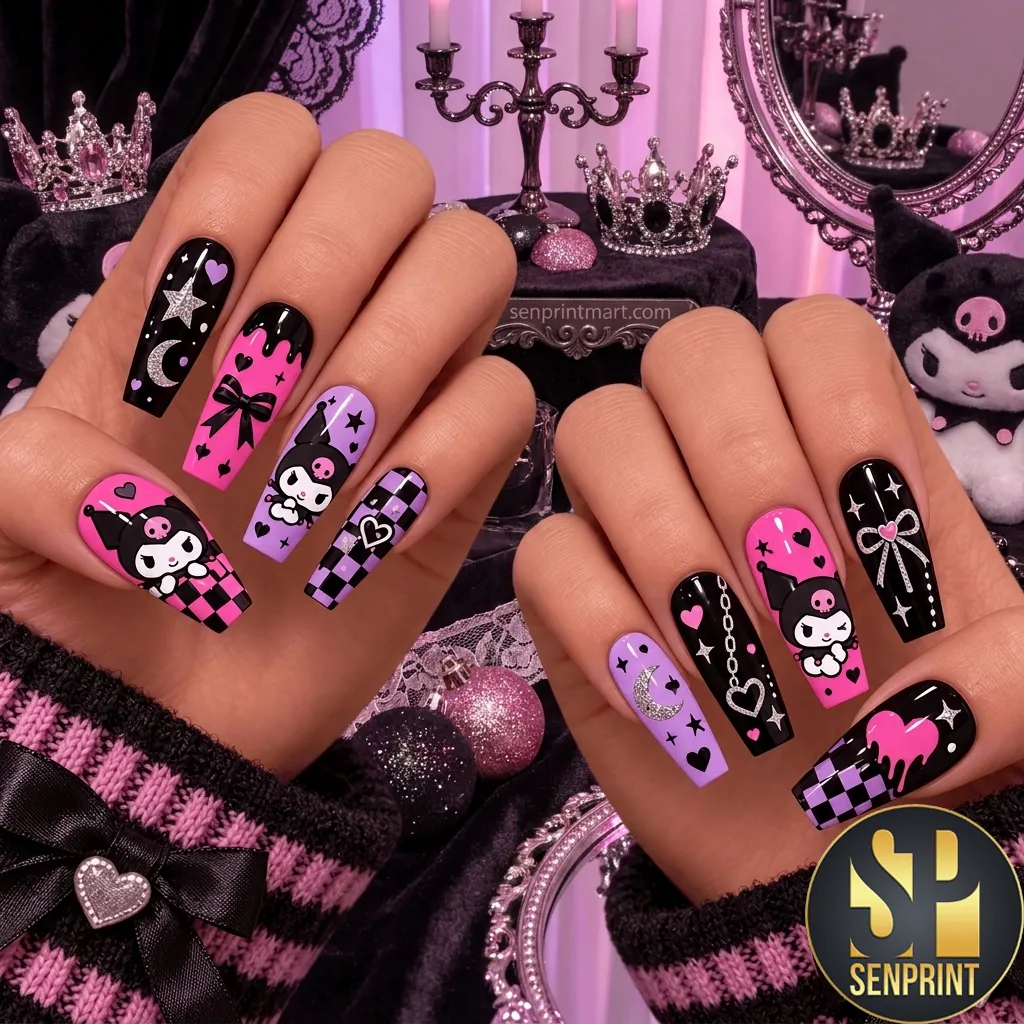
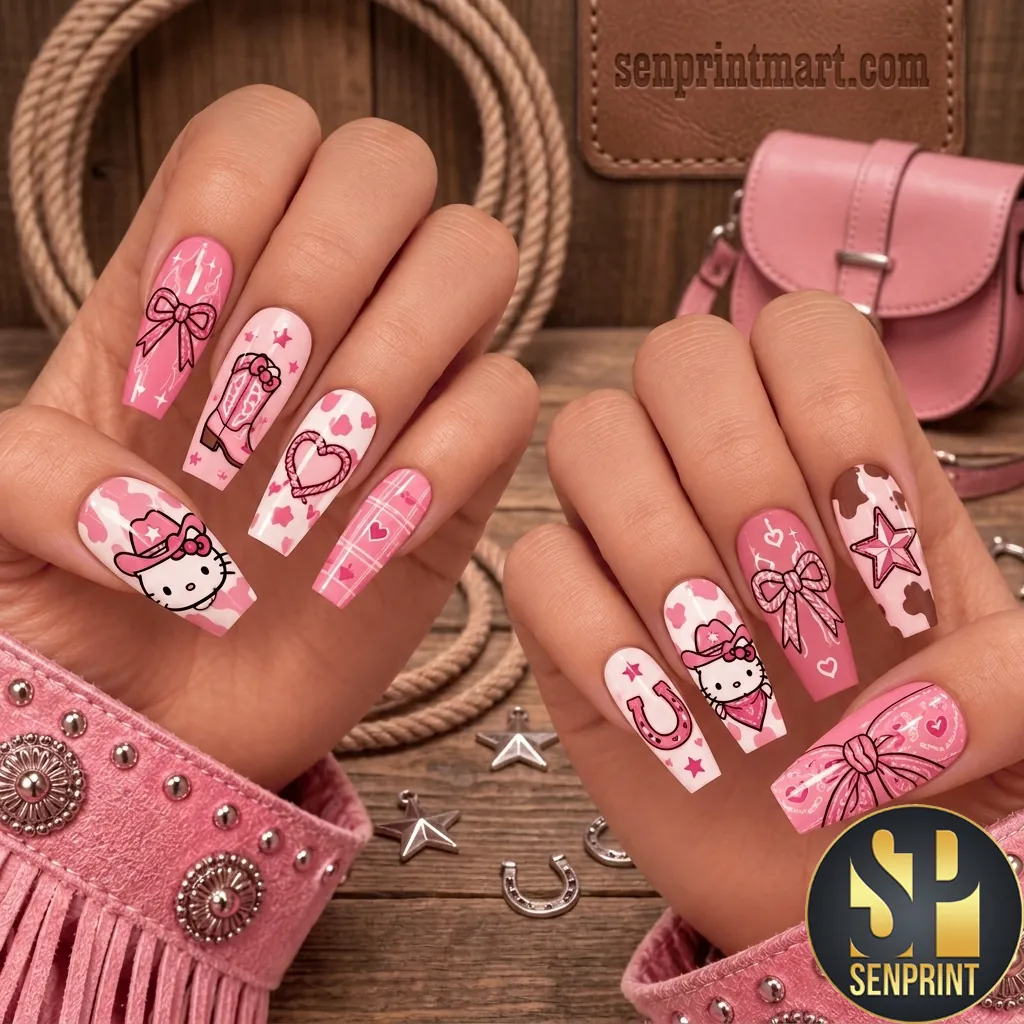
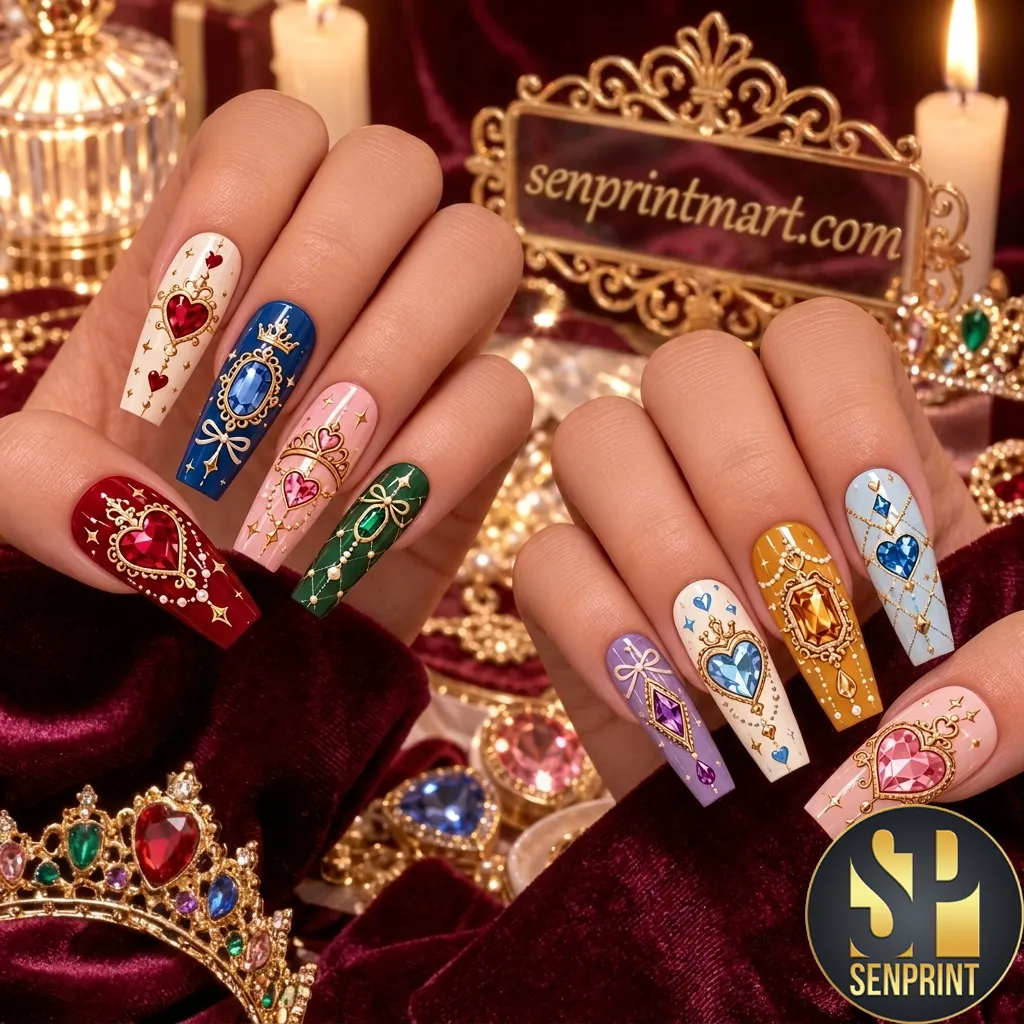
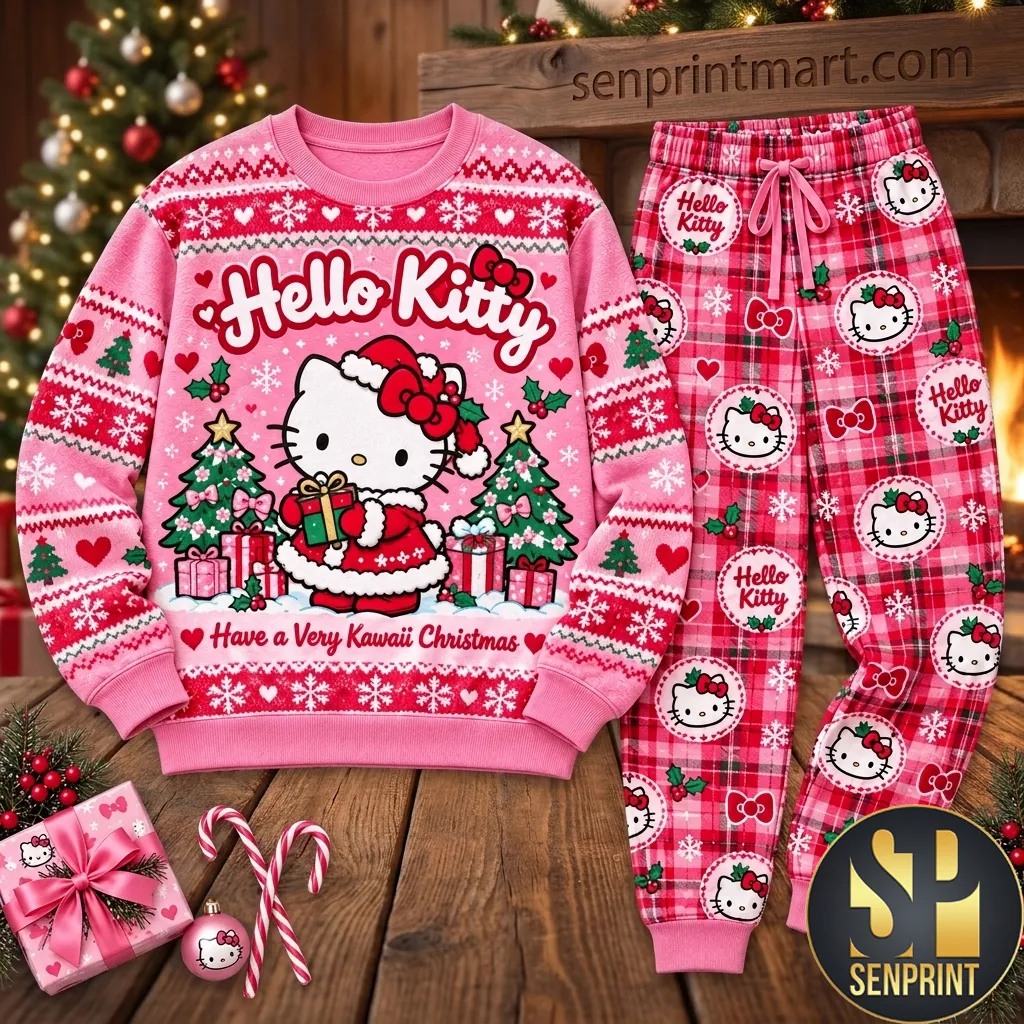
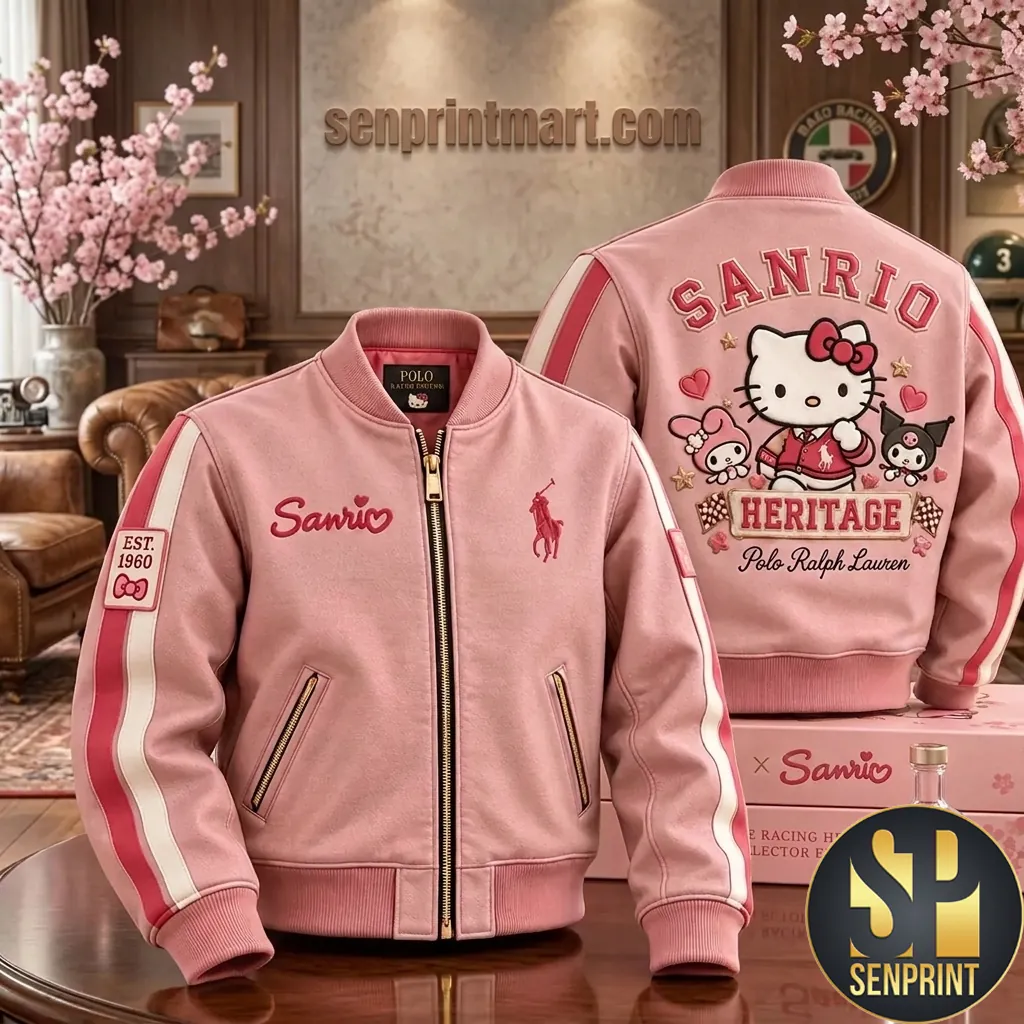
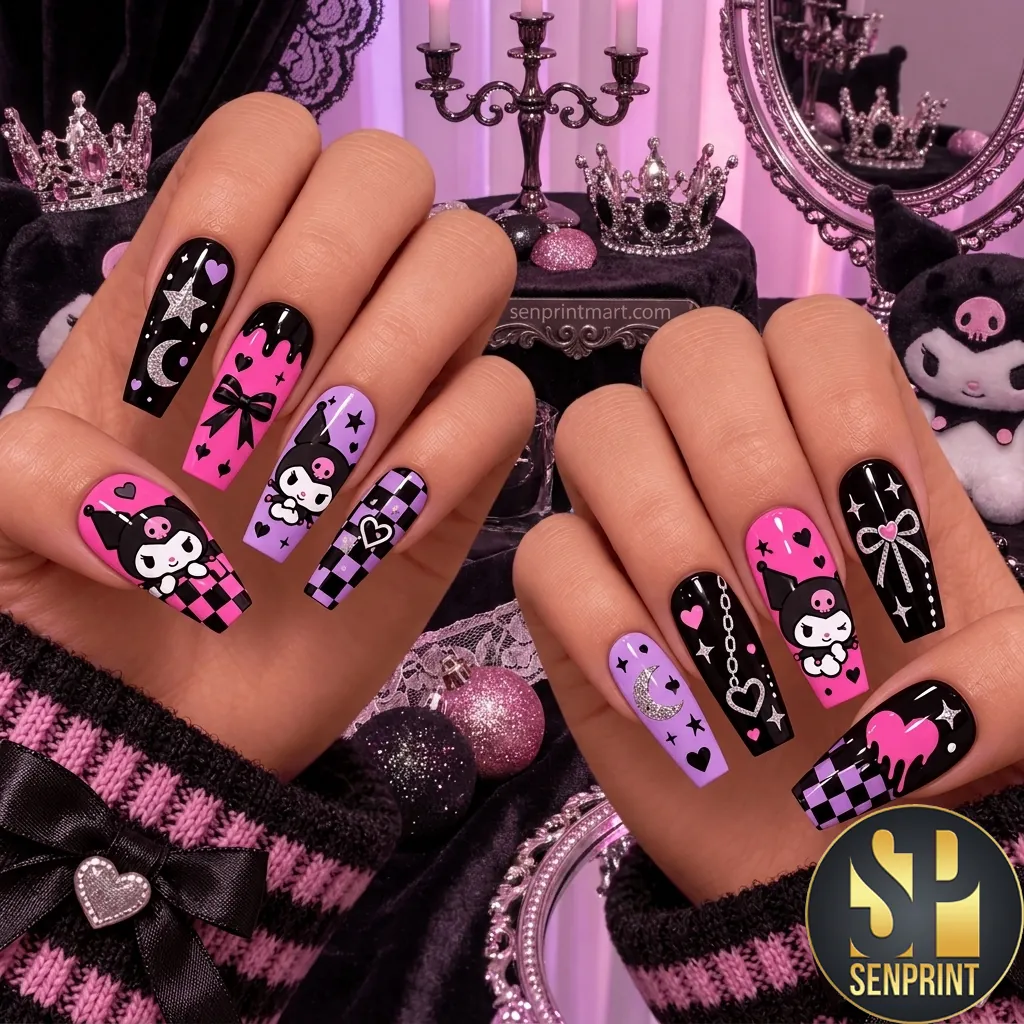
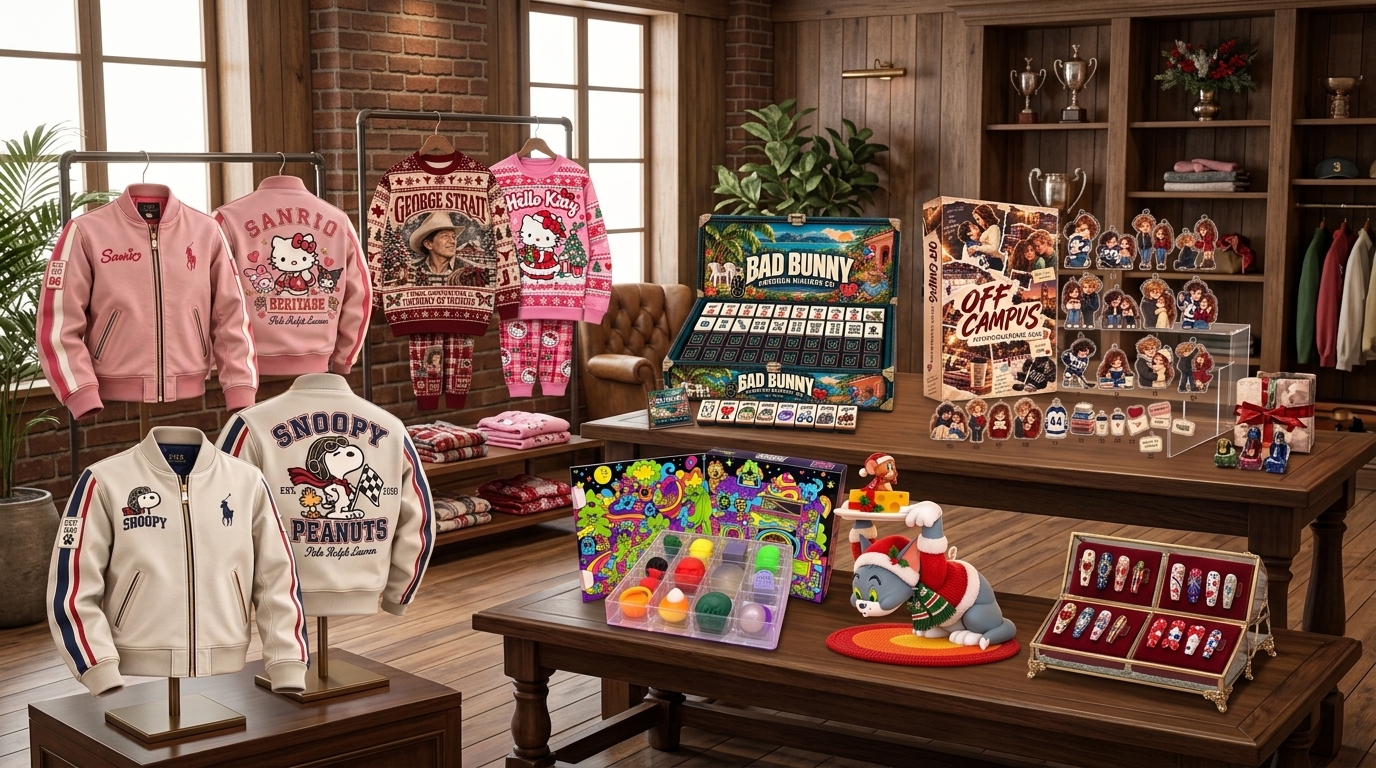
This lifestyle synergy is mirrored in seasonal merchandise offerings. Items like the Hello Kitty Heritage Pink Racing Bomber Jacket translate iconic branding into athletic outerwear, while Kuromi Aesthetic Pink and Black Gothic Coffin Press On Nails incorporate distinct visual moods into personal grooming. Similarly, the Hello Kitty Kawaii Christmas Pink Holiday Pajama Set integrates festive comfort into domestic celebrations, illustrating how enthusiasts leverage recognizable motifs for self-expression.
Such diversity of application highlights the multi-format nature of Sanrio fandom, spanning collectibles, apparel, beauty products, and media. Rather than supplanting existing habits, Party Land introduces a unifying digital nexus where disparate factions of the fanbase can converge through shared interactive experiences.
Furthermore, the expansive roster accommodates nuanced consumer preferences beyond marquee names like Hello Kitty, permitting lesser-known favorites to resonate with specific players. The party-game architecture accommodates these varied affinities harmoniously, transforming high character counts into an inclusive invitation for diverse audiences.
Following launch week, attention shifts to upcoming promotional milestones, including a family demonstration tour commencing November 28 in Okazaki. These hands-on activations will provide direct public access ahead of a four-week promotional blitz, though long-term momentum will ultimately rely on organic player retention.
Looking ahead, Sanrio has already teased subsequent software development with Sanrio Kawaii Me Live!, framing Party Land as the inaugural cornerstone of a sustained interactive strategy rather than a standalone experiment. The immediate focus, however, rests on today’s debut and its capacity to establish a credible benchmark for Sanrio Games.
Ultimately, the true metric of success transcends intellectual property scale or visual aesthetics, resting instead on everyday gameplay experiences. Whether minigames provoke genuine amusement, board modes sustain group focus, and secondary features encourage repeat visits will define the enduring legacy of this publishing venture.
As of October 29, Hello Kitty Party Land is officially live, inviting audiences into a dynamic virtual ecosystem where beloved icons transition from passive companions on everyday objects into active participants in shared play.
Complete Character, Music and Fan Collection
The complete selection from this collection, including character-inspired fashion, music designs, sporting keepsakes and seasonal favorites.