Life Style
Eight Seconds, One Kickoff: Sirianni’s London Decision Leaves Eagles Searching for Answers
Oct
Fresh off a disheartening defeat in the British capital, Philadelphia Eagles head coach Nick Sirianni returned to the team’s facility on Monday, October 12, grappling with the strategic misstep that transformed an imminent victory into a third consecutive loss. Just 24 hours after a 19-17 setback against the Jacksonville Jaguars at Tottenham Hotspur Stadium, Sirianni conceded that electing to keep the final kickoff in play with a mere eight seconds remaining handed their opponents an unmerited lifeline. Beyond the singular sequence of the final seconds, a more pressing existential question now confronts the franchise: whether a roster depleted by injuries and sudden personnel shifts can recalibrate its execution before an early-season skid solidifies into a crisis.
Sunday’s afternoon fixture in London initially shaped up as the script for a character-building triumph. Jake Elliott had split the uprights from 48 yards out, edging the Eagles ahead 17-16 with only eight seconds left on the stadium clock. Yet, rather than opting for a routine touchback that would have demanded an improbable, full-field drive from Jacksonville under severe time constraints, the coaching staff elected for a live return. Return specialist Ameer Abdullah fielded the kick and surged 53 yards downfield, leaving a solitary second on the clock. Rookie kicker Cam Little subsequently delivered under maximum pressure, converting a 57-yard field goal to snatch victory away from Philadelphia at the final whistle.
Sirianni shouldered full accountability immediately after the final whistle and reiterated that stance during his Monday media briefing. The defeat dropped Philadelphia to a sub-par 2-3 record, while Jacksonville improved to 4-1 on the campaign. For the Eagles, the most distressing element of the loss was not simply the magnitude of the miscalculation, but its stark transparency. Having weathered a grueling, hard-fought contest, the team held a precarious lead in the waning moments paired with an ostensibly straightforward tactical choice on how to safeguard it. The ensuing fallout has consequently transformed that decision into a severe examination of sideline decision-making, locker-room fortitude, and the trajectory of a campaign that still holds ample time for correction.
The tactical calculus behind the final kickoff
Kickoffs are frequently viewed as mere administrative interludes between high-leverage plays, particularly once an offense has expended considerable effort to reclaim the lead. At Tottenham Hotspur Stadium, that conventional assumption dissolved entirely. Philadelphia’s methodical final drive had achieved its primary objective: positioning Elliott within field-goal range. He executed his assignment flawlessly. However, the subsequent sequence altered the governing parameters entirely, as Jacksonville required only an explosive return rather than a complete offensive drive to propel themselves into Little’s reliable range.
Under current league kickoff rules, forcing the ball through the end zone for a touchback would have automatically set the Jaguars up at their own 35-yard line. Lacking timeouts and facing a strict eight-second deficit, Jacksonville would have been forced to execute a completion and step out of bounds to set up a challenging, long-range attempt. Opting to keep the ball live traded that manageable defensive posture for the volatility of open-field containment. Abdullah successfully exploited those coverage gaps, allowing Little to deliver the decisive blow.
Attributing the pivotal return solely to a missed tackle misrepresents the complexity of special-teams execution, which fundamentally hinges on disciplined spacing, precise pursuit angles, and lane integrity. The initial strategic directive established the underlying risk profile long before any individual defender attempted to make a play. Sirianni’s candid postgame assessment acknowledged this exact distinction: while athletes bore the responsibility of execution, the overarching tactical gamble rested squarely on the coaching staff. During his Monday review, he continued to voice palpable regret that instructions had not been given to drive the kickoff deep into the end zone.
Early indications had already signaled that special teams would serve as an uncommonly volatile theater throughout the afternoon. Jacksonville initially appeared to take the opening kickoff back for a touchdown, only for the score to be nullified by penalties. That same chaotic opening sequence culminated in the ejections of Philadelphia linebacker Jeremiah Trotter Jr. and Jacksonville defender Bryan Thomas Jr. following a heated altercation—foreshadowing a tempestuous contest that would ultimately hinge on special-teams execution at the final whistle.
That opening skirmish also carried tangible roster consequences, as the Eagles immediately lost a key contributor to their coverage units, while running back Will Shipley subsequently departed due to a foot injury. Neither development single-handedly dictated the final coaching decision, nor do they serve as an excuse. However, they highlighted the extent to which personnel combinations had been compromised by the time Sirianni weighed his options following Elliott’s go-ahead score, making the conservative strategic choice appear increasingly prudent in retrospect.
To their credit, the Jaguars still had to execute under pressure. Abdullah capitalized on a momentary seam at the game’s absolute zenith of importance, and Little—who had earlier misfired on an extra point—composed himself to drill the longest and most consequential field goal of his young career. Compounding their resilience, Jacksonville was forced to navigate an improvised special-teams setup, utilizing defensive tackle DaVon Hamilton as an emergency long snapper. Overcoming their own internal disruption only served to heighten the dramatic impact of their finish.
For a visiting squad on an international stage, a late score typically provides the catalyst for uninhibited celebration. In this instance, however, it produced a jarring and disorienting reversal of fortune. Philadelphia’s offense had successfully achieved its mandate, their reliable kicker had delivered in the clutch, and the scoreboard reflected a 17-16 Eagles advantage. The chaotic final seconds did not retroactively invalidate the hard work of the preceding four quarters, but they fundamentally altered how that effort would translate into the AFC-NFC landscape and league standings.
A resilient squad unable to afford squandered effort
The sting of the defeat was further magnified by the reality that Philadelphia entered the contest facing significant roster attrition. The week had been upended by the retirement of veteran right tackle Lane Johnson and a trade involving center Cam Jurgens, while injuries further depleted their offensive arsenal. Key playmakers such as Saquon Barkley and DeVonta Smith were sidelined, and several additional players sustained injuries over the course of Sunday’s action. Consequently, the Eagles fielded a lineup vastly different from the cohesive unit anticipated at the onset of the autumn schedule.
Those profound roster adjustments threw the defensive unit’s gritty performance into sharp relief. Defensive tackle Jalen Carter consistently disrupted Jacksonville’s offensive scheme throughout the opening half, and the Eagles executed a resolute goalline stand that kept the Jaguars out of the end zone. While Philadelphia failed to command every facet of the game across all four quarters, they repeatedly engineered opportunities against a formidable opponent boasting an above-the-line record. The defense supplied enough tenacity to keep a late-game victory within reach.
Even so, Jaguars quarterback Trevor Lawrence managed to exploit periodic coverage lapses, racking up 331 passing yards and two touchdowns. Wide receiver Parker Washington proved to be a primary beneficiary, hauling in both scoring receptions—including a brilliant, high-degree-of-difficulty grab in the fourth quarter that briefly propelled Jacksonville ahead. The contest was defined by these stark tactical contrasts: sustained defensive resistance by Philadelphia interspersed with explosive breakthroughs by Jacksonville’s playmakers. Though the final kickoff proved decisive, it served as the culmination of a back-and-forth affair marked by shifting momentum.
Quarterback Jalen Hurts also injected a vital spark into an offense that battled consistency issues throughout the afternoon. His perfectly placed 62-yard touchdown strike to receiver Darius Cooper helped establish a first-half advantage for Philadelphia. However, the Eagles struggled mightily to establish a reliable ground game, managing a meager 22 rushing yards overall. This lack of offensive balance placed an immense burden on a makeshift offensive line and isolated passing concepts, clarifying why the late scoring drive felt so critical—scoring opportunities had been exceptionally difficult to manufacture.
Isolating a solitary sideline decision offers a convenient narrative hook for post-game analysis, yet the broader evaluation of the team’s standing is considerably more complex. Philadelphia has struggled to generate sustained offensive rhythm, and an mounting casualty list has repeatedly forced unpracticed personnel combinations onto the field. Even a pristine, well-managed finish would not have instantly erased those structural concerns. Nevertheless, securing the victory would have validated the gritty resilience of their emergency lineups and defensive perseverance.
Instead, the setback marked the team’s third consecutive defeat following a promising 2-0 start to the year. Coming on the heels of losses to Chicago and the Los Angeles Rams, the result deepens the realization that Philadelphia’s margin for error has rapidly compressed. While pronouncing the campaign written off after five games would be premature—five weeks outline existing vulnerabilities rather than an immutable verdict—the collapse in London guaranteed that upcoming evaluations will center on systemic issues rather than mere bad luck or isolated injuries.
The unique geographic backdrop added an extra layer of poignancy to the afternoon. Tottenham Hotspur Stadium offered a grand international stage complemented by a passionate, vocal contingent of Eagles supporters who crossed the Atlantic in force, effectively drowning out the designated home crowd for much of the afternoon. Yet the contest concluded with those loyal traveling fans watching opposing celebrations erupt on the opposite sideline. While the venue did not author the tactical error, it undeniably magnified the emotional weight of the final scene.
Analyses following dramatic finishes often attempt to neatly compartmentalize individuals into heroes and villains, but game tape rarely accommodates such simplistic binaries. Elliott delivered under pressure with a clutch go-ahead kick; Lawrence and Washington orchestrated two vital scoring connections for Jacksonville; Carter anchored Philadelphia’s front with disruptive brilliance; Abdullah carved out the game-defining return; and Little executed the winning field goal. Meanwhile, Sirianni accepted full accountability for exposing his squad to unnecessary risk. Every single component forms an indispensable part of the narrative; disregarding any individual element would yield an incomplete portrait of the contest.
Monday reflections and the journey toward recovery
By Monday morning, the Eagles had departed London, shifting the focal point from the agonizing final sequence to the arduous preparation required for the week ahead. Sirianni emphasized conducting an objective performance review, reinforcing trust within the locker room, and actively formulating solutions rather than entertaining excuses. His message acknowledged 2-3 as the authentic record earned on the field while reinforcing that ample time remains on the schedule to enact meaningful corrections.
Navigating the divide between verbal accountability and tangible tactical repair will dictate the franchise’s trajectory over the coming weeks. While publicly admitting a strategic miscalculation during a press conference is necessary, demonstrating that internal decision-making and game-management protocols have been refined is far more demanding. This requires scrutinizing communication channels to the sideline, evaluating how strategic choices are weighed under pressure, and determining whether viable alternatives were overlooked. The stark clarity of Sunday’s outcome renders this exhaustive review mandatory, yet the ultimate goal must transcend merely second-guessing past choices.
Sirianni also defended the strategic intent behind Philadelphia’s final offensive possession, noting that the primary objective—advancing the football sufficiently to put Elliott within scoring range—was successfully fulfilled. Divergence in opinion centers on the subsequent tactical choice rather than the execution of the drive itself. Maintaining this distinction is crucial, as emotional post-game discourse often conflates distinct phases of a chaotic finish. The head coach deliberately separated the offensive achievement of the final drive from the special-teams decision that immediately followed.
Persistent roster questions, however, present more stubborn challenges. While Sirianni expressed cautious optimism regarding injured players without guaranteeing specific timelines, the coaching staff faces critical evaluations regarding availability for upcoming practices. Furthermore, the stagnant running game requires a systematic remedy rather than a temporary patch. Although Philadelphia can draw optimism from Cooper’s explosive playmaking capabilities and the relentless energy of their defensive front, an NFL offense cannot rely indefinitely on sporadic deep completions to mask difficulties in sustaining drives.
An upcoming home matchup against the Carolina Panthers at Lincoln Financial Field on Sunday, October 18, provides an immediate benchmark far more telling than any press conference remarks. Playing on home turf guarantees no automatic reprieve, as the Panthers will arrive prepared for battle. What remains within Philadelphia’s direct control is whether they can implement a disciplined special-teams protocol, establish a more reliable offensive scheme, and convert hard-earned competitive advantages into tangible victories.
The stakes moving forward are inherently psychological as well as tactical. Having tasted sustained success under Sirianni, the Eagles understand the standard associated with winning football. While institutional memory can guide a turnaround, past achievements cannot score points or stifle an opponent’s final drive. The overarching challenge for the coaching staff is maintaining player buy-in while fully acknowledging that Sunday’s most prominent error stemmed from leadership’s strategic oversight.
For the fanbase, such moments render the ensuing week uniquely difficult. Emotional investment in the Eagles does not pause in the wake of a disheartening outcome; if anything, fan frustration directly reflects the high expectations the franchise has cultivated. Football loyalty manifests in spirited discussions, game-day apparel, home decor, and team-themed memorabilia. While items such as a Philadelphia Eagles Monopoly Collector Edition Board Game inject familiar team colors and spirit into a household game night, the low-stakes environment of a living room bears little resemblance to the high-pressure decisions that dictate professional football outcomes.
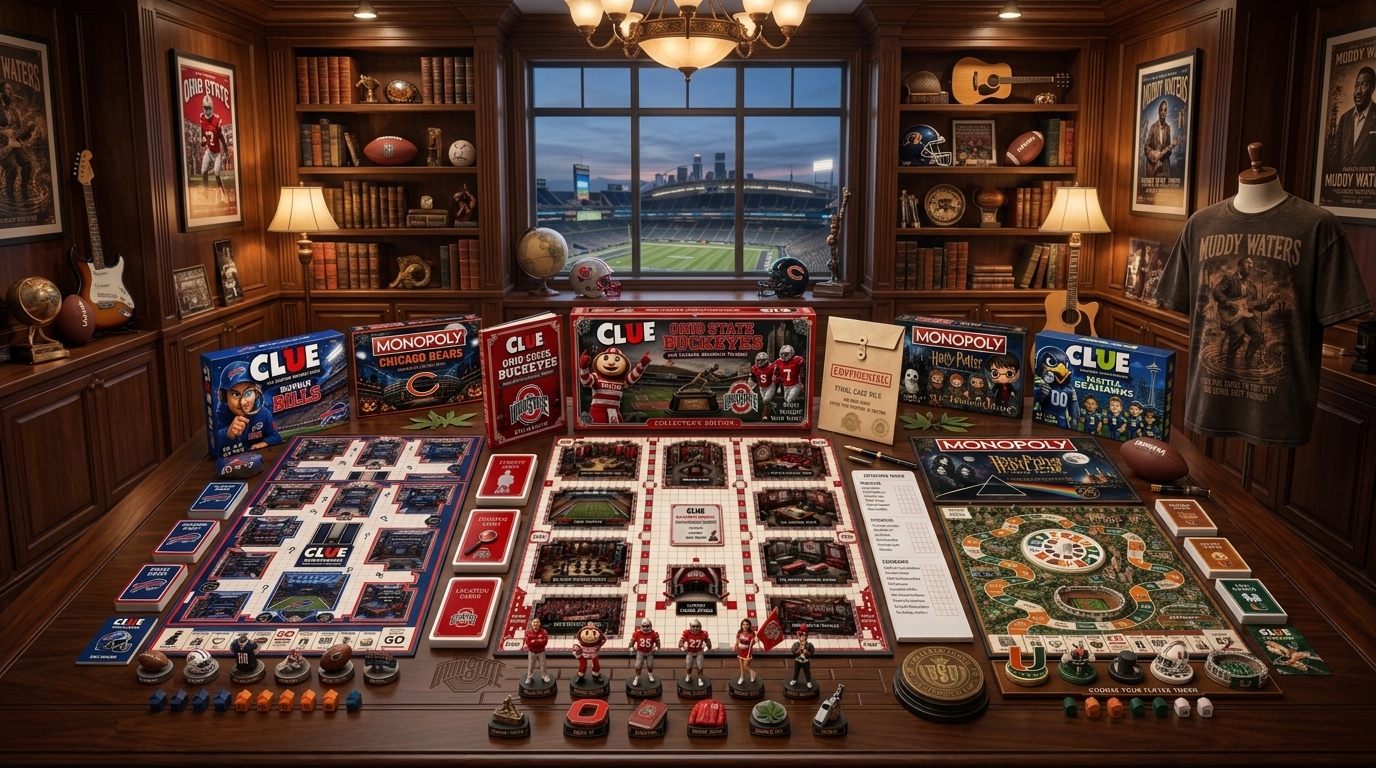
This exact distinction explains why a difficult loss forms part of an enduring, multifaceted relationship between a franchise and its supporters rather than serving as a definitive conclusion. Fans can dissect missed opportunities without projecting that every subsequent weekend will mirror the past. A diverse array of cultural memorabilia, alternate team gear, classic music homages, and fandom collectibles—as featured in the collection below—illustrates the rich tapestry of personal passions. None of these items alters the final tally in London; rather, they represent the personal affinities enthusiasts cherish between kickoff weekends.
For Sirianni and the Eagles organization, the definitive response cannot be found in retrospective explanations concerning eight fleeting seconds in London. It must be forged through rigorous preparation during the practice week ahead. The defeat to Jacksonville will stand as a defining narrative of their early autumn—not because it predetermines the season’s ultimate fate, but because it rendered necessary internal corrections impossible to ignore. A live kickoff snowballed into an explosive return, a successful long-range field goal, and a stark public lesson. The immediate challenge is whether Philadelphia can translate that harsh lesson into a winning performance on home turf.
Full Product Collection